
As the use of cavity sliding doors, floor to ceiling sliding doors, and other minimalist door systems grows across residential and commercial projects, so too does the expectation that these products integrate seamlessly with modern construction materials—including tiles. However, recent updates and guidance from Australian regulators have highlighted a growing issue on building sites: standard cavity slider frames are often not engineered to support the significant weight of tiled walls.
For builders, architects, and designers, this can create uncertainty, rework, and delays—especially in wet areas where tiled finishes are non-negotiable.
At Triline Door Solutions, we recognised early that addressing this problem required more than advice. It required engineering. Over several months, we carried out a detailed testing program to ensure our pocket door system could reliably meet the structural demands of tiled wall applications and comply with the relevant Australian Standards.
Understanding the Australian Standards Behind Tiled Wall Installations
Recent industry updates, including guidance from the QBCC, have made one point crystal clear: cavity slider frames must be designed to meet the structural requirements of tiled walls. Specifically, installations must comply with:
- AS1684 – Timber Framing Code
- AS 3958.1 – Guide to the Installation of Ceramic Tiles
- Fixing requirements of wet area lining board manufacturers
- Load expectations for tiles, adhesives, and wall boards
- Moisture and deflection limits to protect waterproofing systems
In short, the cavity frame in a tiled area must act as a structural wall—not just a door housing. Many traditional cavity slider systems were never engineered for this type of loading, and as a result, they don’t meet the above requirements. This gap has led to builders adding extra stud walls, losing floor space, or modifying designs late in the project.
We saw an opportunity to solve this challenge directly in our product.
How Triline Engineered a Compliant Solution
When these industry concerns first emerged, our engineering team began developing a formal test regime to understand exactly how much load a tiled wall places onto a cavity pocket—and how our cavity slider could be strengthened to meet those demands.
The Testing Approach
In 2020, we formulated a testing methodology based on Appendix D of AS1720.1 – Timber Structures: Design Methods, which provides a framework for prototype structural testing. This standard gave us the path to quantify load, measure wall deflection, and validate whether our cavity frames could perform under tiled-wall conditions.
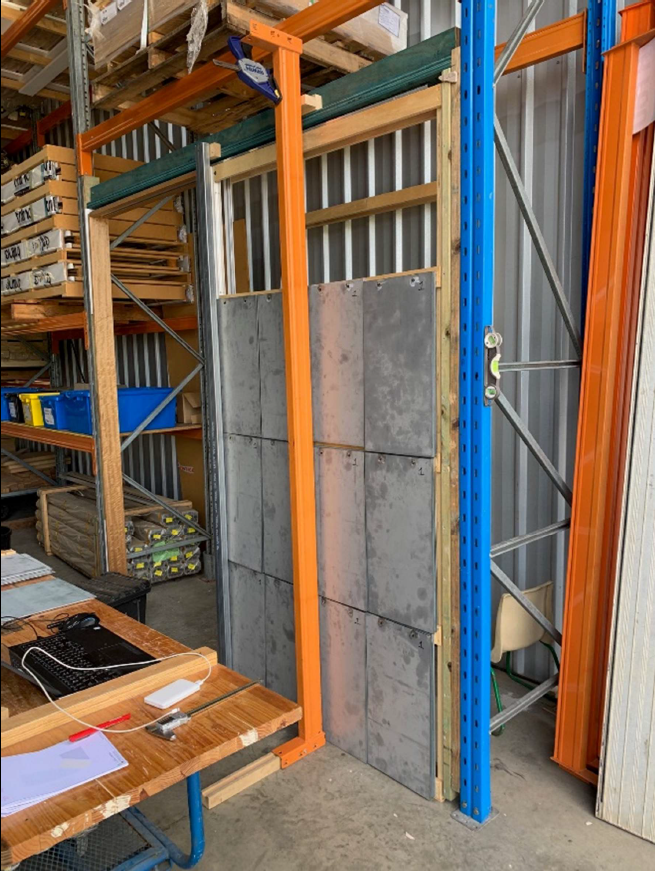
Testing was carried out on our 2400 x 1200 cavity unit using controlled load applications simulating:
- Various tile thicknesses
- Adhesive types
- Wall board systems
- Combined weight of tiles + glue + sheeting
- Real-world wall pressures
All testing was completed at our facility in Gympie QLD and verified in accordance with the Australian Standard.
The Results
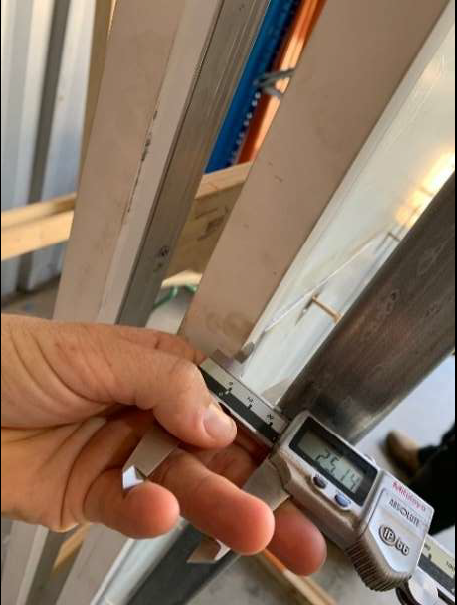
Our cavity unit successfully met the prototype testing requirements, provided timber moisture levels were kept below 15%. This confirmed that our engineered system delivers the structural performance needed to support tiled wall installations without deflection, failure, or risk to waterproofing systems.
In other words: builders can confidently tile directly onto the cavity pocket—no false wall or additional stud required.
Solving Real-World Challenges for Builders
Testing is one thing—but solving onsite challenges is what matters.
With our engineered cavity sliders, builders no longer need to:
- Add extra stud walls to support tiled finishes
- Compromise room dimensions to gain structural capacity
- Worry about tiles cracking due to cavity wall movement
- Lose time checking compliance mid-project
Instead, they get a ready-to-install system that supports tiled finishes, aligns with architectural intent, and meets Australian compliance requirements from the outset.
Our Tile Load Compatibility Chart: Clear Guidance for Every Project
To make specification and installation even easier, we’ve developed a detailed chart outlining the loading combinations supported by our engineering. This includes:
- Leading lining board brands
- Glue and adhesive weight ranges
- Tile thickness allowances
- Total wall build-up limits
Builders can quickly reference the exact wall composition their project requires and confirm it fits within the tested and approved limits of our system.
This clarity reduces guesswork, speeds up decision-making, and ensures confidence when tiling directly onto a cavity pocket.
A Better Outcome for Designers, Builders & Homeowners
At Triline, we believe high-performance door systems shouldn’t restrict design. Our engineered cavity frames allow builders, architects, and designers to use tiled finishes with cavity sliding doors, floor to ceiling sliding doors, and custom sliding doors—without compromise.
By investing in proper testing and engineering, we’ve created a compliant, reliable pocket door system tailored for today’s construction standards and tomorrow’s design expectations.
See the following brochure for the tile loading chart, we’re always here to help.
